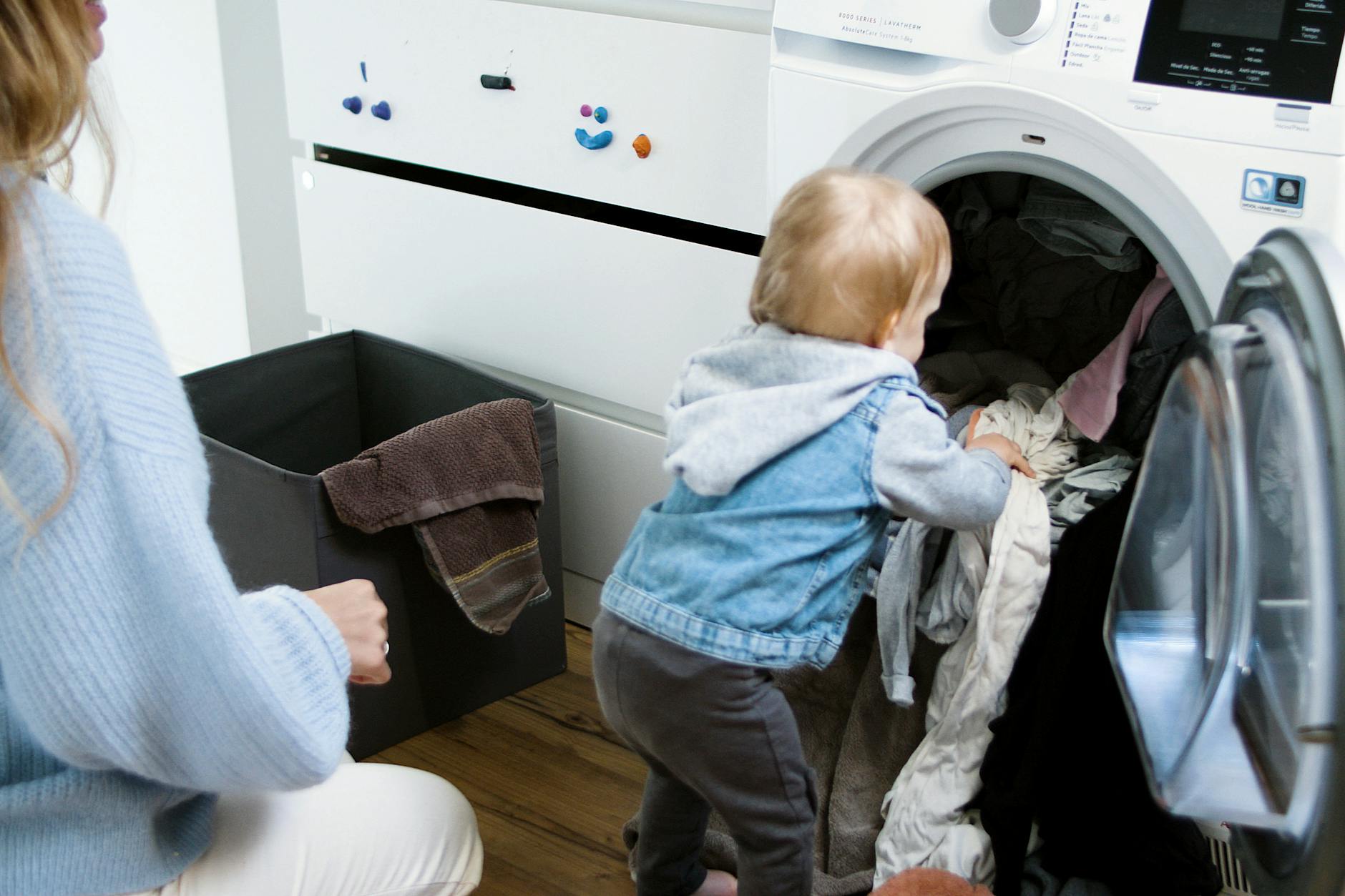
Toddlers love to help—even if their version of helping isn’t always exactly, well, helpful. The good news? Giving your toddler simple, age-appropriate chores isn’t just extremely cute—it’s incredibly beneficial for their physical, mental, and emotional development. And totally worth taking the time to do.
So, let’s break down why chores are good for toddlers and share some easy chores your toddler can start helping with today.
Why Chores for Toddlers?
Many parents worry that chores are “too much” for toddlers, or that they are being hard on their kids, but research and child development experts agree: toddlers thrive when given meaningful responsibilities. So the exact opposite is true. Not giving your little one ways to be part of the daily routine deprives them of opportunities for major growth. Just look at some of the benefits!
Toddler-friendly chores help build confidence, independence, responsibility, and motor skills, all while making your child feel like a valued part of the family. It builds life-long skills and sets valuable habits in place.
Chores for your little one:
- Build self-confidence and pride
- Encourage independence
- Develop fine and gross motor skills
- Teach cooperation and teamwork
- Help toddlers feel capable and included
These are all skills you want to see in your kids as they grow, so why not start working on them early?
How to Introduce Chores to Toddlers
Before jumping in, keep these tips in mind:
- Model first: Show them how to do the chore.
- Keep it simple: One step is enough.
- Expect imperfection: Learning is more important than perfection.
- Use encouragement, not pressure: Praise their success and refrain from criticizing mistakes.
- Make it part of your routine: Repetition is an excellent teacher.
- Watch for things they gravitate to naturally to set them up for success.
And, most importantly… Make it enjoyable!
It can be tedious to teach a little one how to do a task. Remember they are new to this world and can’t be expected to know how to do even simple things. Take your time, be patient, and if you feel yourself getting frustrated, take a break. The goal is to make it a positive experience for your kiddo and you as well!
When you’re ready to teach them a task, start with small, simple things.
Keep in mind that the word “chore” is used pretty loosely when we’re talking about young children. At this stage, it’s not really about productivity — it’s about gently introducing the idea of responsibility.
For example, my eighteen-month-old is responsible for finding her favorite stuffed animal and bringing it to bed each night.
We started with simple cues like, “Find your puppy dog,” and then helped her locate it. Before long, she understood what to do and began looking for it on her own and carrying it to her bedroom.
Once she mastered that routine, we were able to build on it. Now she has her own little broom and “helps” sweep, cleans up her toys when asked, and even assists with putting dishes in the drying rack.
The key is to start with very simple tasks that require minimal prompting — “find your puppy dog,” “pick up your blocks,” and so on — and then clearly model exactly what you’d like them to do. As they gain confidence, you can gradually add more responsibility.
Last but not least, allow plenty of time.
There will always be days when things need to get done quickly. But when you can, put your patience on and walk them through what you are asking them to do. Give them the time they need to figure it out so that the task is rewarding, not discouraging.
And remember: at the end of the day, relationship and growth matters more than perfection.
Easy Toddler-Friendly Chores
So, what are some other simple tasks your little one can do?
1. Cleaning Up Toys
Age: 18 months+
Why it works: Teaches responsibility and sorting skills.
- Put toys back in bins
- Stack books on a shelf
- Place stuffed animals in a basket
Tip: Use labeled bins or pictures to make cleanup easier.
2. Helping in the Kitchen
Age: 2+ (with supervision)
Why it works: Builds confidence and practical life skills.
- Carry unbreakable items to the table
- Put napkins or utensils out
- Help wipe the table with a cloth
- Toss scraps into the trash
3. Laundry Helpers
Age: 2+
Why it works: Encourages independence and sorting.
- Put dirty clothes in the hamper
- Match socks
- Help move clothes from washer to dryer
- Fold simple items like washcloths
4. Simple Household Tasks
Age: 2+
Why it works: Makes toddlers feel like real contributors.
- Dust with a cloth or sock
- Use a toy broom or handheld broom
- Help water plants
- Hold the dustpan while you sweep
5. Caring for Personal Belongings
Age: 18 months+
Why it works: Builds self-care habits early.
- Put shoes in a designated spot
- Hang up coats (low hooks help!)
- Throw diapers or wipes away
- Place dirty dishes in the sink
What If My Toddler Refuses to Help?
That’s normal! Toddlers are learning autonomy, and some days they’ll say no.
Try these strategies:
- Turn chores into a game
- Offer choices (“Do you want to put away blocks or books?”)
- Work alongside them
- Praise effort, not outcome
Use encouragement as a motivator
Toddlers love praise. They love to cheer and clap, so instead of motivating with sticker charts or treats, use praises:
- “You worked really hard on that!”
- “You helped our family today.”
- “I noticed how carefully you put those away.”
Cheer, clap, wave your arms around, and yell “Yay!” when they do the task. The excitement gives their growing brains a big dose of dopamine. They will love doing things just to get your response!
This also builds intrinsic motivation (comes from within) which lasts much longer than rewards.
Final Thoughts: Small Chores, Big Impact
Toddler chores aren’t about raising perfect helpers—they’re about raising confident, capable kids who know they belong.
By offering simple, developmentally appropriate chores, you’re planting seeds that grow into independence, responsibility, and self-worth.
And yes—some days it will be slower and messier. But the confidence your toddler gains is always worth it.
Leave a Reply